
Amazon gift cards carry direct money value, which is why scammers chase them aggressively. Many scams succeed not because people act carelessly, but because scam setups look calm, friendly, and familiar. This guide expands deeply on how to identify scams early and how to avoid them safely, with clear explanations written in a slow and human manner.
Every scam discussed here targets Amazon users, as gift card codes function like cash until redeemed.
Why Scammers Prefer Amazon Gift Cards
Amazon gift cards work as instant store credit. Once someone redeems a code, a reversal is almost impossible. This single factor makes gift cards attractive for fraud.
Scammers prefer gift cards because tracking becomes harder once redemption completes, especially when compared with bank transfers that leave clearer trails. Gift card redemption finishes instantly, which removes the time window needed to stop misuse. When this reason becomes clear, it becomes easier to stay alert whenever gift cards appear in urgent or pressure-driven situations.
Fake Amazon Gift Card Emails and Messages
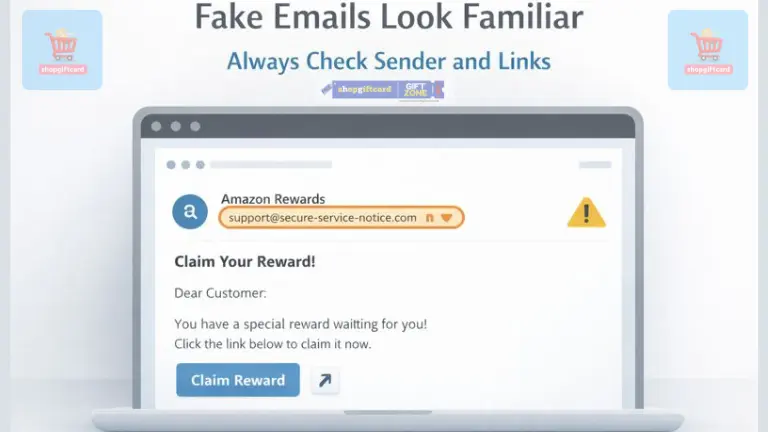
Fake emails and messages still remain the most common scam entry point. These messages usually claim a reward, account issue, or security alert.
These emails often mimic Amazon’s visual style closely, which makes the sender name look familiar at first glance and lowers suspicion. The message then relies on emotional language and urgency to push quick action, hoping the reader reacts before taking time to verify the details.
You should watch for these warning signs.
- Message pressure that pushes urgency
- Email address mismatch on close inspection
- Links that lead outside the Amazon domain
- Requests for gift card codes or login details
Amazon never asks users to share gift card codes through messages.
Fake Telegram and WhatsApp Giveaway Groups
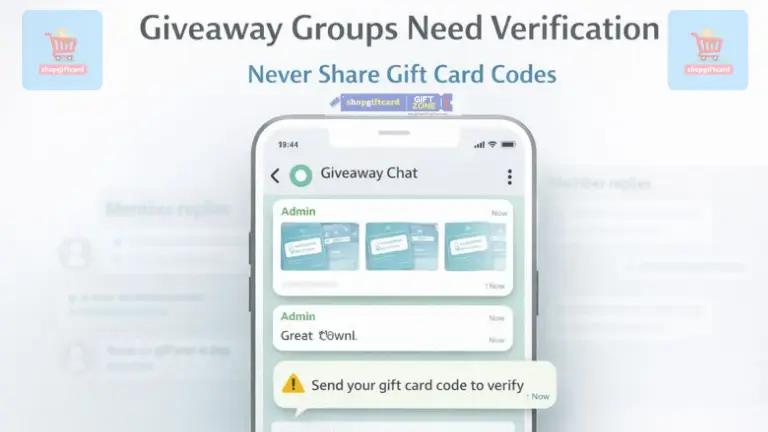
Messaging apps host many giveaway groups, and while some operate honestly, many exist only to collect gift card codes or personal data from unsuspecting users.
Scam groups often rely on constant success screenshots, claims of limited slots, and restricted comment sections to create pressure and control the conversation. When these patterns appear together, they usually signal a setup designed to extract value rather than deliver real rewards.
- Admin posts only, no member replies
- Repeated screenshot proofs without names
- External links that redirect frequently
- Requests to send codes for verification
A real giveaway never asks participants to send gift card codes.
Fake Gift Card Code Generator Websites
Code generator websites attract users who feel impatient. These sites promise unlimited gift cards through automation.
The website often shows fake animations and loading bars. After a wait, the site asks for human verification. That verification usually redirects users to surveys, downloads, or phishing pages. No valid code ever appears.
A simple truth stays firm. Amazon gift card codes come only from Amazon or approved sellers.
Phishing Pages That Copy Amazon
Phishing pages often closely copy Amazon layouts, making them look convincing enough to ask users to sign in or redeem a gift card without raising immediate suspicion.
The website address usually reveals the problem, because it contains extra words, numbers, or subtle spelling tricks that do not match official Amazon domains, and the page itself may load more slowly or show small design inconsistencies.
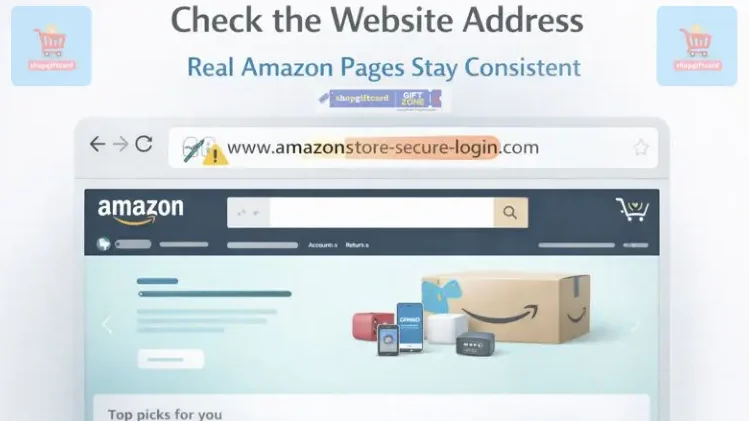
Careful attention to the website address remains the most reliable check, since official Amazon pages always use secure and clearly recognizable Amazon domains.
Giveaway Forms That Ask for Payment or Codes
Some giveaway pages claim that verification requires a small gift card payment. They ask users to submit a code to confirm eligibility.
This tactic works because small amounts feel harmless. Once submitted, the scammer redeems the code immediately. You should understand that no legitimate giveaway asks participants to submit any gift card.
Fake Customer Support Calls and Chats
Some scammers pretend to act as Amazon support. They call or chat claiming account issues. These scammers often guide users step by step toward gift card purchases. They explain the process calmly to reduce suspicion.
Amazon support never asks users to buy gift cards for issue resolution.
Table Showing Scam Types and Risk Signals
This table explains common scams and the danger signs.
| Scam Type | Risk Signal |
|---|---|
| Fake emails | Urgent tone and external links |
| Telegram groups | Code sharing requests |
| Code generators | Human verification pages |
| Phishing pages | Unusual website addresses |
| Fake support | Requests for gift card payment |
How to Verify a Giveaway Safely
Verification protects the gift card balance. Small checks prevent large losses.
You should follow these safety rules.
- Check the official website’s presence and history
- Search the brand name with scam keywords
- Avoid giveaways that rush decisions
- Ignore links shared through direct messages
- Use only official Amazon pages for login
Legitimate platforms explain rules clearly and never rush users.
Extra Checks That Many People Miss
Many scams succeed because users skip basic verification steps. You should also look for these signs.
- No clear company name or address
- No refund or dispute information
- Repeated spelling or grammar mistakes
- No public reviews outside their own pages
- No contact option other than messaging apps
Trust grows from transparency, not urgency.
What You Should Do After a Suspected Scam
Quick action reduces damage when a gift card issue appears, because early steps can limit misuse before the situation spreads further.
The first response should be an immediate password change for the Amazon account, which cuts off access if credentials were exposed. After that, a careful review of order history and balance activity should take place to identify any unfamiliar purchases, redemptions, or adjustments.
Account security settings also deserve attention at this stage, because unknown email addresses, phone numbers, or devices may remain linked without notice.
Official Amazon support should handle these situations through the help pages, since only verified channels can review account activity and apply protective measures when needed.
If the gift card balance already moved to another account, recovery chances remain very low, which explains why prevention always matters more than recovery. Private redemption, cautious behavior around urgent messages, prompt code use, and avoidance of public devices reduce risk long before support involvement becomes necessary.
Frequently Asked Questions
Do genuine Amazon gift card giveaways exist?
Genuine Amazon gift card giveaways do exist, but they usually operate through official company websites, trusted apps, or well-known platforms with a clear history. These giveaways explain their rules openly and never rush users into sharing private details or codes.
Does Amazon ever ask for gift card codes?
Amazon never asks users to share gift card codes through email, phone calls, social media messages, or chat support. Any request for a gift card code outside the official redemption page should be treated as a clear warning sign.
Can gift card scams appear on social media?
Gift card scams appear frequently on social media platforms because moderation often stays limited, and content spreads quickly. Scammers take advantage of comments, direct messages, and fake pages to create urgency and extract codes.
Are all Telegram giveaways unsafe?
Not all Telegram giveaways are unsafe, but verification must remain strict every time before trusting any group. Legitimate groups avoid asking for codes, passwords, or screenshots and usually link back to a visible website or known platform.
Conclusion
You usually see Amazon gift card scams succeed because they mix a calm tone with friendly language and artificial urgency, which makes the situation feel safe while quietly pushing you to act quickly. Most balance loss happens when you trust appearances instead of noticing repeated patterns that signal risk.
Your safety grows when patience replaces speed, because any giveaway that pressures you to act fast, asks for gift card codes, or sends you to external login pages deserves doubt. When you follow the checks explained on our website, your gift card balance stays protected and remains under your control instead of slipping away through pressure tactics.